Published on October 7th, 2025 and Updated on December 17th, 2025
Check out SneakPeek Gender Test to find out your baby’s gender as early as 6 weeks with over 99% accuracy!
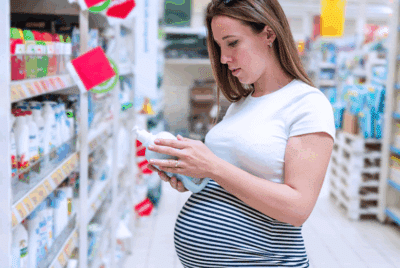
Nearly everything changes when you’re pregnant—including your hair.
In fact, pregnancy can dramatically affect how your hair looks, feels, and behaves. Like most other transformations that occur during this time, these shifts stem from hormonal changes, especially surges in estrogen, progesterone, and other reproductive hormones.
As a result, many people find themselves reaching for new hair products or salon treatments to manage or embrace their new tresses. But not all of them are considered pregnancy-safe hair products—knowing which to enlist, and what things to avoid in early pregnancy, can help you step into your pregnancy journey with greater confidence.
How does pregnancy impact hair?
People commonly report changes to their hair during pregnancy. Some of the most notable changes might include:
- Hair growth cycles – Normally, individual strands of hair cycle through a phase of growth (anagen), rest (catagen), and shedding (telogen). But during pregnancy, elevated estrogen levels lengthen the anagen phase and delay the transition of hair to the resting or shedding phase. This causes more hairs to stay in the growth phase for longer, reducing the amount of fallout. The result? The fuller, thicker tresses many people enjoy while pregnant.
- Hair texture changes – Your hair’s feel, density, and even curl patterns may change, as pregnancy can subtly alter the shape and behavior of hair follicles. You may notice your hair feels silkier, wavier, more voluminous, or more unruly, depending on what you’re used to.
- Scalp changes – Some people notice their scalp feels oilier or drier during pregnancy. This could be due to the changes in oil production, hydration, and nutrient demands that occur as a result of pregnancy hormones.
- Generalized hair growth – Many pregnant people observe changes in the hair that grows on other areas of their body, too! You might notice new hair around your face, back, or belly—all of which are 100% normal.
No matter what changes you notice, it’s unlikely they’ll endure forever. In the postpartum stages, many people experience a phase of increased shedding—called telogen effluvium—when the hairs you added during pregnancy undergo a shedding during a relatively short window.
The bottom line? Pregnancy can set a “new normal” when it comes to your hair, causing many people to reach for products they normally wouldn’t. For this reason, it’s important to know which products and treatments are safe so that you can care for both your baby and your hair.
Hair care and pregnancy safety: what to know
During pregnancy, your body becomes more sensitive to small exposures—chemicals and treatments that were once innocuous may carry more weight. Fortunately, many hair products have low systemic absorption through the scalp, but the stakes can feel higher when your body is nurturing new life.
What that in mind, let’s break down what to consider when it comes to salon treatments and hair care products during pregnancy—and how to weigh the risks vs. benefits. It’s also vital to be aware of the list of medications you can take while pregnant when dealing with common aches or illnesses, as safety applies to ingestible products just as much as topical ones.
Hair relaxation and perms
Relaxers and perming agents often contain strong chemicals like glycolic acid derivatives that may be absorbed through the skin. There are two main issues with these treatments:
- The presence of endocrine-disrupting chemicals
- The potential for inhalation exposure, specifically of the chemicals used to open hair cuticles, which may produce fumes
For this reason, it’s best to avoid these treatments during pregnancy—or at least delay them until the second or third trimester and opt for pregnancy safe skin care instead.
Hair straightening and keratin treatments
Straightening treatments, especially formaldehyde-based ones or those that release formaldehyde gas, pose a recognized risk to pregnant individuals. Formaldehyde is a known irritant and possible carcinogen, and is commonly listed among ingredients to avoid during pregnancy.
Hair dying, bleaching, and highlighting
Hair coloring and bleaching are among the most common types of hair treatments, whether conducted at a salon or with an over-the-counter kit. Many experts consider some forms of hair coloring fairly safe for pregnant people, as the skin can usually curb absorption of chemicals into the body.
That said, it’s still important to use precautions like:
- Waiting until your second trimester to color hair
- Using a gentle or temporary dye
- Keeping the coloring area well-ventilated
Styling products (Sprays, gels, mousses, and serums)
Many styling products are lightweight and used in small amounts, which, thankfully, mitigates much of the risk. In fact, experts say most hair products are unlikely to cause fetal health hazards.
That said, issues can emerge from certain ingredients in these formulas, such as:
- Aerosols
- Fragrances
- Preservatives
We’ll dive into a shortlist of what to avoid later, but, whenever possible, it’s best to choose formulas with minimal ingredients and fragrances. Additionally, aim to use them in well-ventilated areas to avoid direct inhalation of aerosol sprays.
Leave-In treatments, oils, and serums
Leave-in treatments can be lower-risk if their ingredient lists are short and sweet. Pure, natural oils like argan and jojoba oil are often safe, though it’s worth checking product formulas to screen for added preservatives or essential oils that could be risky.
When possible, aim to patch test to see if your scalp shows signs of sensitivity (since skin may be more reactive during pregnancy).
Shampoos, conditioners, and dry shampoos
If you’re trying to pick a safe shampoo and conditioner for pregnancy, you’re in luck: Most in-shower hair care products are considered fairly safe for pregnant people.
An ideal formula will:
- Be paraben- and phthalate- free
- Use gentle surfactants (the lather-making ingredients in shampoo)
- Be formulated without synthetic fragrances
Pregnancy-safe shampoo brands won’t contain harsh preservatives or high doses of salicylic acid. However, these can often crop up in anti-dandruff shampoos that treat the scalp.
Hair care ingredients to avoid during pregnancy (and why)
To make it easier to vet your hair care products, keep a shortlist of ingredients to steer clear of in your back pocket. The following is a non-exhaustive but helpful summary of ingredients to avoid:
- Formaldehyde and formaldehyde-releasing agents – These are often found in straightening treatments, as well as other cosmetics like nail varnishes. Formaldehyde is a known irritant, and some research links it to pregnancy loss. On labels, you might also see it as:
- Formaldehyde
- Quaternium-15
- DMDM
- Hydantoin
- Imidazolidinyl urea
- Diazolidinyl urea
- Sodium hydroxymethylglycinate
- Brompol
- Parabens – These are synthetic preservatives found in many shampoos, conditioners, and hair masks. Some research indicates they may have endocrine-disrupting properties, which could interfere with hormones during pregnancy. Ingredients to look for include:
- Propyl
- Butyl
- Isopropyl
- Isobutyl
- Methyl
- Phthalates – Phthalates are commonly used to lengthen the lifespan of fragrances, and they’re often found in scented shampoos, conditioners, and styling products. While evidence is sparse, some studies have linked phthalates to preterm birth. If you want to play it safe, you can look for formulas without the following:
- DEP
- DiBP
- DMP
- DBP
- DOP
- BzBP
- DEHP
Tips for caring for your tresses during pregnancy
If you’re wigged (pun intended) by the idea of checking every hair product for potentially harmful ingredients, it might feel easier to simplify things by just following a few guidelines:
- Use the gentlest effective formula – Rather than searching far and wide for certifiably pregnancy-safe products, it may help to stick to minimalist formulas that are free of sulfates and fragrances. Not only do these help you avoid irritation, but they also help maintain the scalp’s natural barrier function, minimizing unnecessary chemical exposure.
- Use treatments with scalp contact cautiously – Products that come in contact with the scalp pose a higher risk of absorption. If you’re using a mask, protein treatment, or hair color, aim to apply it only on the lengths and ends of hair instead.
- Maximize ventilation and limit inhalation – If you decide to use chemical treatments like coloring or spraying during pregnancy, do your best to ensure the environment has possible airflow. Use a fan, open a window, or make use of any outdoor spaces you have at your disposal. For salon treatments, you can wear a mask or ask your stylist to use foils or a shield to minimize vapor exposure.
- Delay strong treatments until later – Your first trimester is one of the tenderest periods of pregnancy. This is when your baby is developing its foundational physiology, including the spine and brain. As such, it’s recommended you postpone any harsh treatments until after at least your 12th week of gestation.
The need to screen for safe ingredients often extends beyond hair; you might also look for things like pregnancy safe cleaning products to reduce your exposure to harsh chemicals in your home environment and keep. Overall, it’s best to keep things simple during pregnancy. Instead of undergoing major styling procedures or replacing every hair care product with pregnancy-safe alternatives, it might be worth experimenting with doing less.
Pregnancy can be an incredible opportunity to embrace a gentler, softer self-care routine. In doing so, you may find that you protect your hair, your future little one, and your peace of mind.

Bond with your little one sooner with the SneakPeek® Test
If you’re intent on staying informed on the way to your due date, check out the SneakPeek® Early Gender Test. With this test, expecting parents can discover their baby’s predicted sex with over 99% clinically proven accuracy as early as 6 weeks along—well before the second-trimester anatomy scan.
The SneakPeek® Test is the #1 OBGYN-recommended at-home early sex prediction test,* used by millions of expecting parents around the country. Join them and get to know your baby sooner by ordering yours today.
*SneakPeek recommended six to one among 100 OBGYNs surveyed
Editorial Policy
At SneakPeek, our commitment is to provide accurate, up-to-date, and reliable information to empower our readers. Our content is thoroughly researched, reviewed by medical experts, and fact-checked to ensure its credibility. We prioritize the well-being and education of our readers, and our editorial policy adheres to the highest standards of integrity and accuracy in all our articles.
Sources:
- National Library of Medicine. The changes in the hair cycle during gestation and the post-partum period. https://pubmed.ncbi.nlm.nih.gov/23682615/
- The Conversation. From straight to curly, thick to thin: here’s how hormones and chemotherapy can change your hair. https://theconversation.com/from-straight-to-curly-thick-to-thin-heres-how-hormones-and-chemotherapy-can-change-your-hair-219329
- Kaiser Permanente. Pregnancy: Hair Changes. https://healthy.kaiserpermanente.org/health-wellness/health-encyclopedia/he.pregnancy-hair-changes.tn9943
- National Library of Medicine. Telogen Effluvium. https://www.ncbi.nlm.nih.gov/books/NBK430848/
- National Library of Medicine. Safety of hair products during pregnancy. https://pmc.ncbi.nlm.nih.gov/articles/PMC2567273/
- Science Direct. Safety of chemical hair relaxers: A review article. https://www.sciencedirect.com/science/article/pii/S2950198924000333
- Centers for Disease Control. About Formaldehyde and Reproductive Health. https://www.cdc.gov/niosh/reproductive-health/prevention/formaldehyde.html
- Cleveland Clinic. Is It Safe To Dye Your Hair While You’re Pregnant? https://health.clevelandclinic.org/dyeing-your-hair-while-pregnant
- American College of Obstetricians and Gynecologists. Toxic Chemicals: Steps to Stay Safer Before and During Pregnancy. https://www.acog.org/womens-health/faqs/toxic-chemicals-steps-to-stay-safer-before-and-during-pregnancy
- Healthline. Is Salicylic Acid Safe for Skin Care During Pregnancy? https://www.healthline.com/health/pregnancy/salicylic-acid
- Parents. 12 Cosmetic Chemicals to Avoid During Pregnancy. https://www.parents.com/pregnancy/complications/health-and-safety-issues/12-cosmetic-ingredients-to-avoid-during-pregnancy/
- Australian Government Department of Health and Aged Care. Hair care during pregnancy. https://www.pregnancybirthbaby.org.au/hair-care-during-pregnancy
- Kera Bond. Pregnancy Haircare Routine: Safe Products to Use in Each Trimester. https://www.kerabond.in/blogs/guide/pregnancy-haircare-routine-safe-products-to-use-in-each-trimester
Related Posts
Follow Us